
30-Minute Shrimp Pesto Pasta
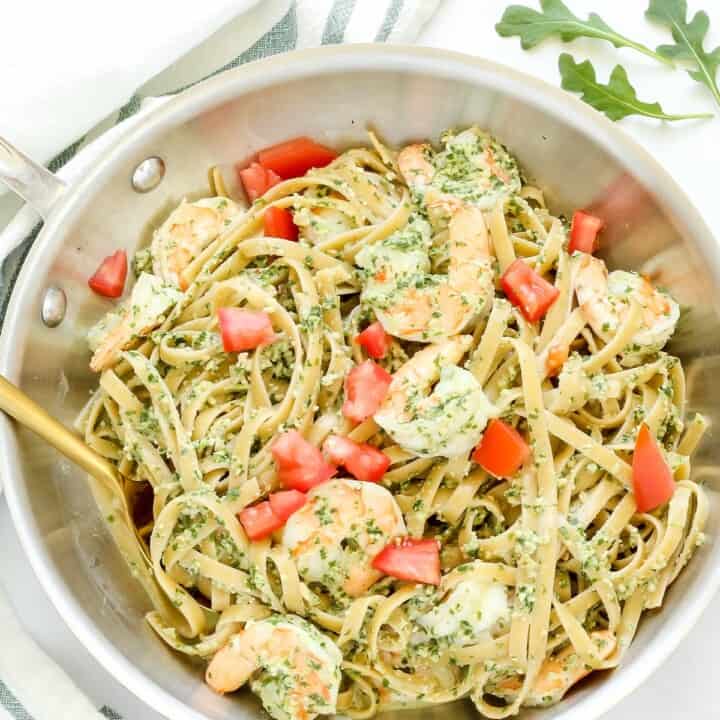
This easy shrimp pesto pasta dish is a restaurant-worthy dinner that comes together in about 30 minutes. Fettuccine and perfectly tender shrimp are tossed with a vibrant, homemade arugula-basil pesto cream sauce and juicy diced tomatoes.
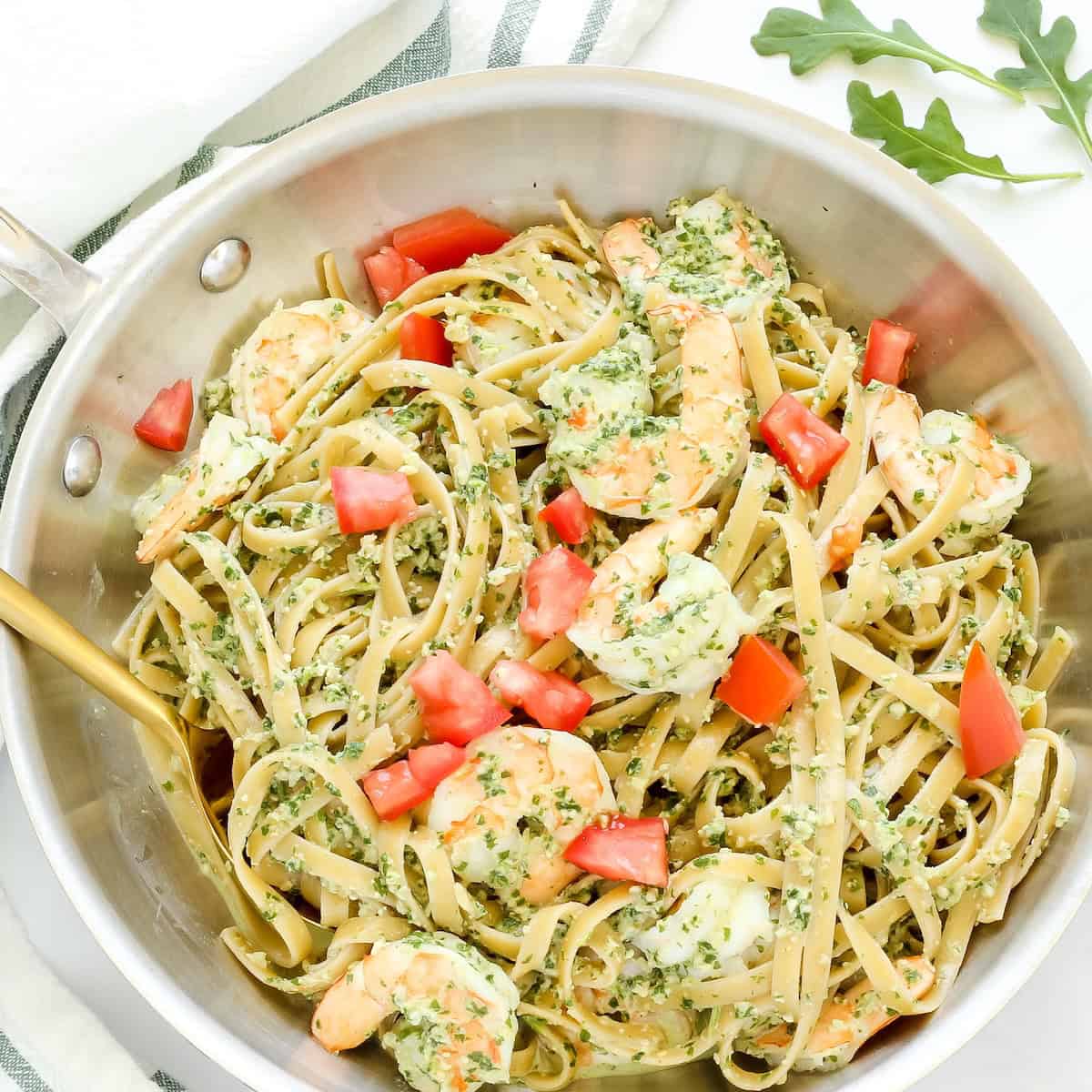
The pesto is a unique blend of fresh basil, peppery arugula, and walnuts, for a sauce that’s bright and herby without being overpoweringly “basil-y” — plus a nutrient boost you won’t find in a standard pesto.
This easy recipe is perfect for a busy weeknight, but it’s also impressive enough to serve for date night, company or a special spring or summer celebration like Mother’s or Father’s Day.
Dietitian tip: Shrimp is a delicious way to get more seafood on the table during the week without much fuss — and it’s a great choice if you’re looking for high-protein foods to add to your diet. Between the shrimp, the arugula-based pesto (rich in vitamins A, C, and K, and anti-cancer compounds), walnuts (anti-inflammatory omega-3s), olive oil, and fresh tomatoes, this dish checks a lot of Mediterranean diet boxes.
Recipe At-A-Glance
PREP TIME: 15 minutes
COOK TIME: 15 minutes
TOTAL TIME: 30 minutes
SERVES: 4
DIFFICULTY: easy
RECIPE HIGHLIGHTS: a restaurant-worthy dinner with a flavorful homemade arugula and basil pesto cream sauce.
FEATURED INGREDIENTS: shrimp, fettuccini (or other strand pasta), arugula, basil, walnuts, tomatoes
Why You’ll Love This Recipe
Recipe Ingredients
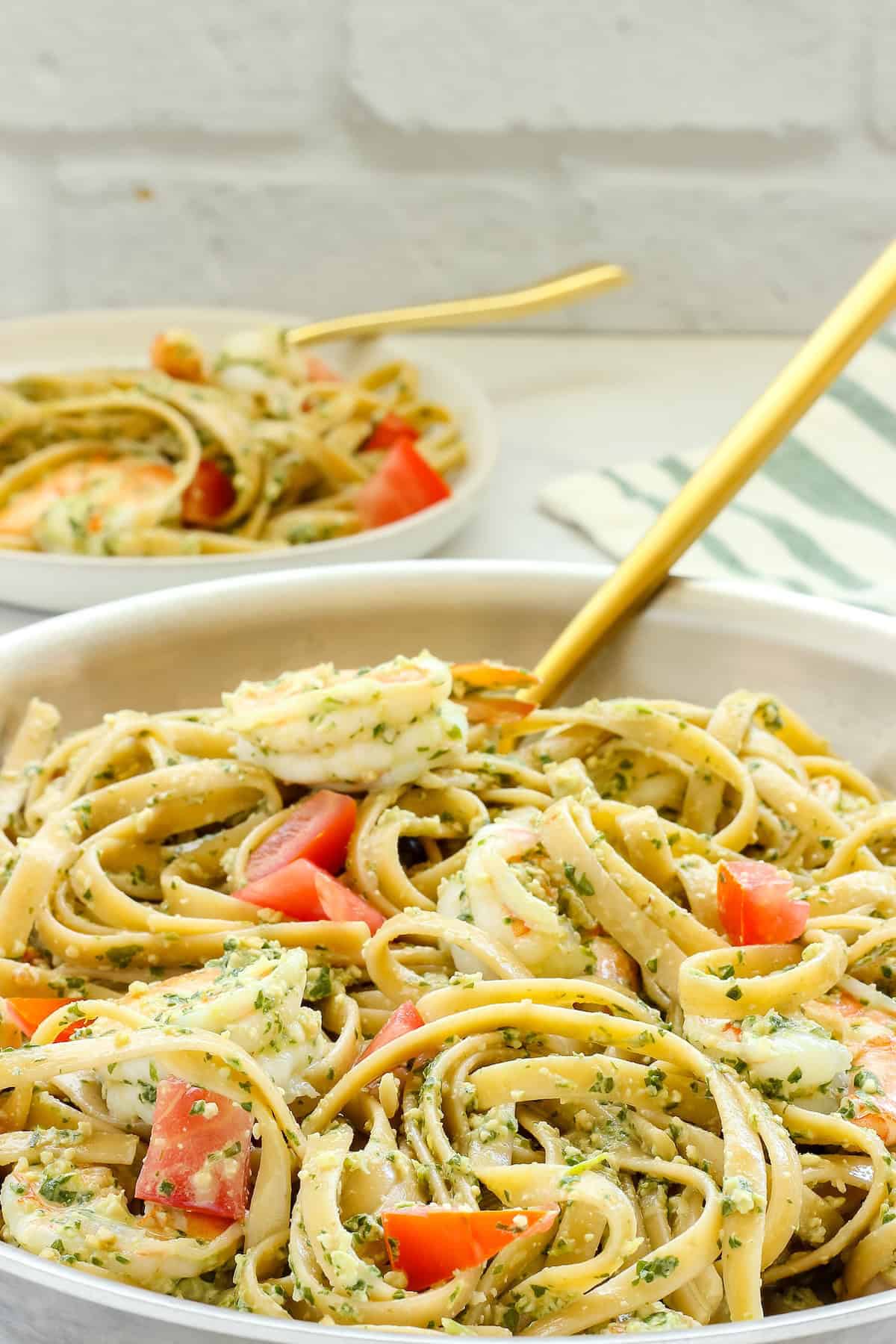
Here are some of the key ingredients needed to make shrimp pesto pasta. Substitutions and variations are listed in the section below.
Be sure to check out the recipe card below for the complete list of ingredients with measurements.

Shrimp – Buy jumbo (21/25 per pound), peeled, deveined shrimp to keep this recipe fast and easy. Or, look for “easy peel” shrimp, which are cleaned, deveined, and simple to prep. Fresh or frozen work equally great. If using frozen, thaw them in a bowl of cold water for 15 minutes before cooking.
Arugula – It softens the intense basil flavor in pesto, adds a gentle peppery note, and, because it’s a cruciferous vegetable, it’s rich in anti-cancer compounds and brings lots of extra nutrition to the table.
Walnuts – They’re a more affordable, nutritious, and less pine-y swap for traditional pine nuts. Walnuts are the only nut with significant amounts of plant-based omega-3 fats (ALA), which support heart and brain health.
Fresh lemon juice – Just a little bit brightens the flavor and keeps the pesto bright green, fresh, and vibrant. Don’t skip it or your pesto may darken in color.
Pasta – I love fettuccine for this recipe because the thicker strands hold the sauce and twirl around your fork. Use whole-grain pasta for more fiber. I promise you won’t taste the difference.
Heavy cream – Just a touch, plus the pasta cooking water, adds a lovely richness to the sauce and helps the pesto cling to the pasta.
Tomatoes – These add bright, juicy flavor and a pop of color, and complement the pesto so well. I recommend Roma tomatoes, which are meaty and less watery than round slicing tomatoes. They dice beautifully.
Substitutions and Variations
- If you’re pressed for time, swap about ⅓ cup of prepared basil pesto (I love Costco’s Kirkland brand) for the homemade pesto.
- For a dairy-free version, skip the Parmesan cheese in the pesto and omit the cream in the sauce. Use extra pasta water to thin the sauce.
- For a lower-carb, higher-protein pasta, try lentil or chickpea pasta.
- Want more veggies? Add a few handfuls of fresh arugula or spinach to the finished dish.
How to Make Shrimp Pesto Pasta
1. Make the pesto. Combine the arugula, basil, garlic, walnuts, Parmesan, and lemon juice in a food processor. Process for about 10 seconds to combine, then stream in the oil as the food processor runs again.
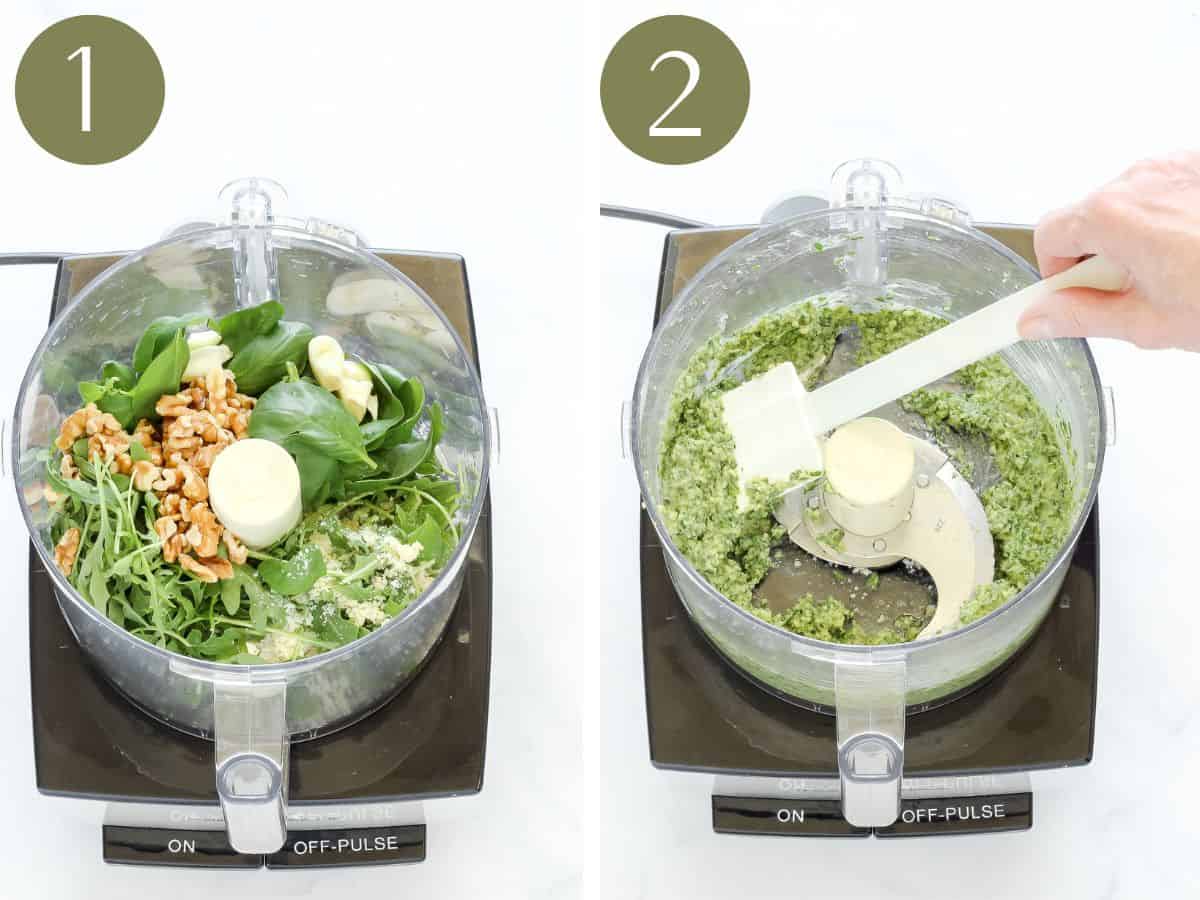
2. Thin the pesto as needed. Check the pesto consistency. If it is too thick, add another 1-2 tablespoons of water to thin it.
3. Cook the pasta and shrimp. Salt a pot of water, bring it to a boil, and cook the pasta according to the package directions. Fettuccine will take about 12 minutes until it’s al dente. Remove about one cup of the pasta water, then turn off the heat and add the shrimp. Strain the past and shrimp as soon as the shrimp turn pink and curl (about 30 seconds).
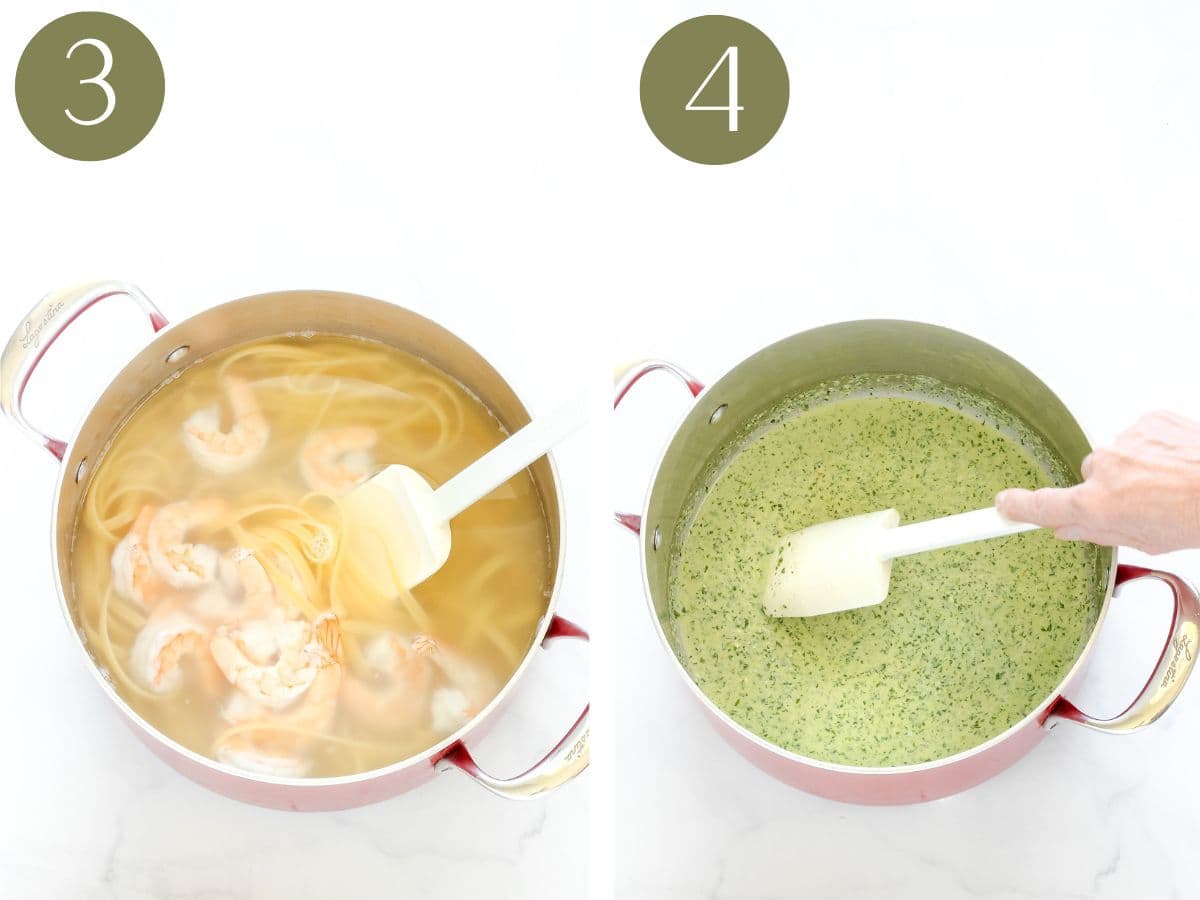
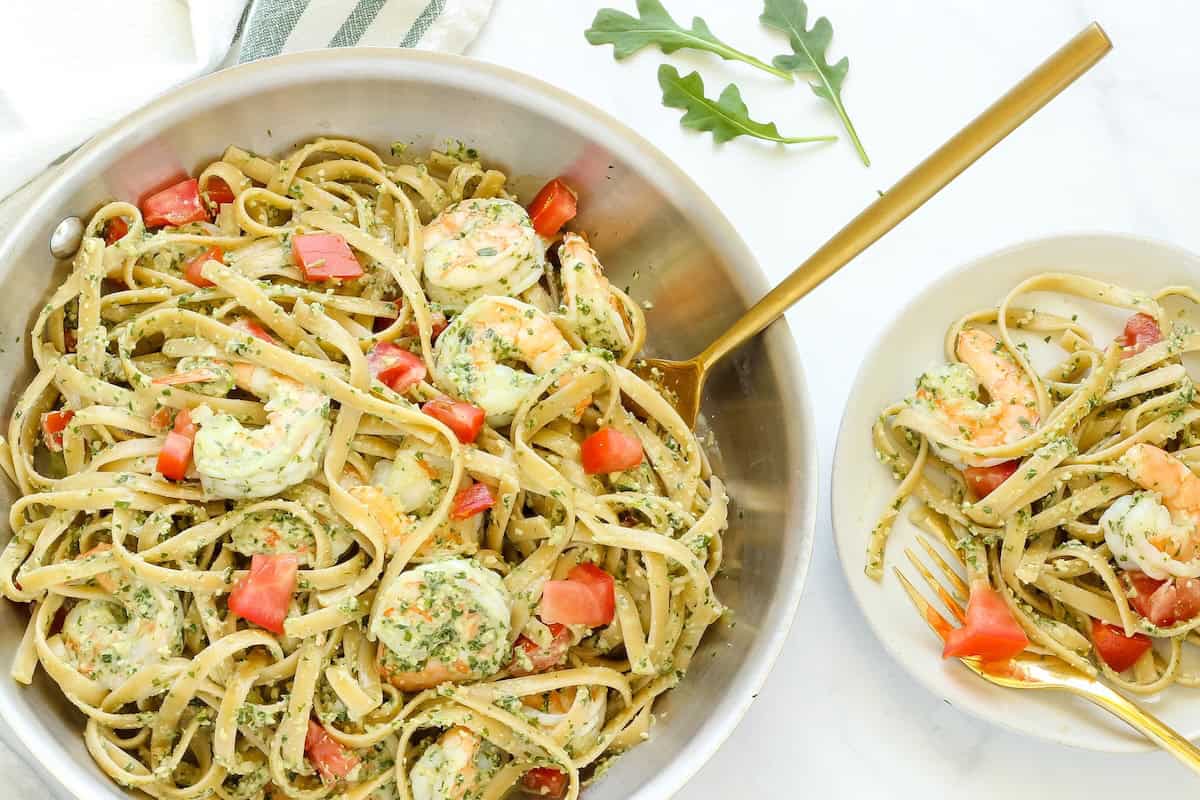
4. Make the pesto cream sauce. Stir about ½ cup of the pasta water into the pesto and pour it into a pan (I use the same one from the pasta and shrimp). Heat it over low heat and gradually stir in the cream. Add the pasta, shrimp, and diced tomatoes, and stir to combine everything.
Expert Tips
Make the pesto first. The pesto comes together in the food processor in under 3 minutes, and it can sit while you boil the pasta and cook the shrimp. This makes the final assembly much faster and easier.
Reserve some pasta water. Before adding the shrimp to the hot water, scoop out about 1 cup of the starchy cooking water. Stirring some into the pesto is what transforms it from a thick paste into a creamy, restaurant-quality sauce.
Don’t overcook the shrimp. They cook in the hot water in about 30 seconds. As soon as they turn pink and form a loose “C” shape, they’re done. If you overcook them, they’ll become rubbery and tough.
Serve this recipe immediately. Like most cream-sauced pastas, this dish is at its best fresh off the stove. The sauce will thicken as it cools, so if needed, add more of the pasta water to loosen it.
What to Serve With Shrimp Pesto Pasta
Serving this for a dinner party or luncheon? This recipe goes well with:
- A roasted tomato tart or baked ricotta with roasted grape tomatoes for an appetizer
- A colorful salad, like a carrot slaw or fennel and orange salad
- Raspberry oatmeal bars for dessert
Recipe FAQs
You can make the arugula-basil pesto a day in advance and store it in an airtight container in the fridge (press plastic wrap directly onto the surface to prevent browning). The pasta and shrimp are best cooked and served immediately.
According to the USDA, a 3 oz serving of shrimp has 161 mg of cholesterol, but research shows that eating shrimp doesn’t adversely affect blood cholesterol levels. It’s saturated fat and trans fat that matter more for heart health. Shrimp (as long as it’s not deep-fried) is actually very low in saturated fat, and it’s high in lean protein, selenium, and even some omega-3s. The American Heart Association recommends eating a variety of seafood at least twice a week, but it’s always wise to check with your own healthcare provider if you have specific concerns about cholesterol or heart disease.
Love this recipe? Please leave a 5-star rating on the recipe card below & a review in the comments section further down the page. Your email will not appear publicly!
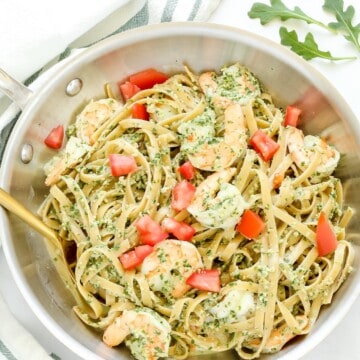
Pasta with Shrimp & Creamy Pesto Sauce
Ingredients
- 1 cup lightly packed fresh basil leaves stems removed
- 2 cups lightly packed arugula
- 3 medium cloves garlic
- 1/4 cup walnuts
- 2 tablespoons grated Parmesan cheese
- 1 tablespoon fresh lemon juice
- 1/4 cup olive oil
- salt to taste
- 8 ounces fettuccine or spaghetti
- 1 pound jumbo shrimp (21/15 per pound) peeled, and deveined
- 1/4 cup heavy cream
- 2 medium Roma tomatoes diced
Instructions
- Combine the basil, arugula, garlic, walnuts, Parmesan cheese, and lemon juice in the bowl of a food processor, and process until fairly smooth. Scrape down the sides of the bowl with a spatula to ensure everything is combined, then pour the olive oil in a stream while the machine runs. Season with salt to taste. If the pesto seems too thick, add 1-2 tablespoons of water to thin it. Transfer the pesto to a bowl or large measuring cup and set it aside.
- Fill a stockpot with about 6 cups of water and bring it to a boil. Add 1 tablespoon of salt if desired. Cook the pasta according to directions until just al dente, about 12 minutes for fettuccini.
- Reserve 1 cup of the pasta water, and remove the pot from the heat. Add the shrimp to the hot water. Once the shrimp turn pink and curl, (about 30 seconds), drain the pasta and shrimp.
- Pour about 1/2 cup of the reserved pasta water into the pesto and stir to combine. Return the pot to the stove, pour the thinned pesto into the pot, and heat it over low heat. Slowly add the cream while stirring the pesto.
- Add the cooked pasta and shrimp to the pesto cream sauce and stir to combine. If necessary, add additional pasta water to thin the sauce.
- Add the diced tomatoes to the pasta and stir. Taste and add additional salt or Parmesan as needed. Serve immediately.
Notes
Nutrition
If you print this recipe, you can scan the QR code below to see updates and tips or leave a comment.